

Share This Article
The Brays Bayou watershed stretches across some of Harris County’s most established and heavily traveled communities. Keeping its network of bayous and tributaries functioning requires continuous maintenance, from removing thousands of cubic yards of sediment to repairing erosion, replacing aging infrastructure, and rehabilitating channels.
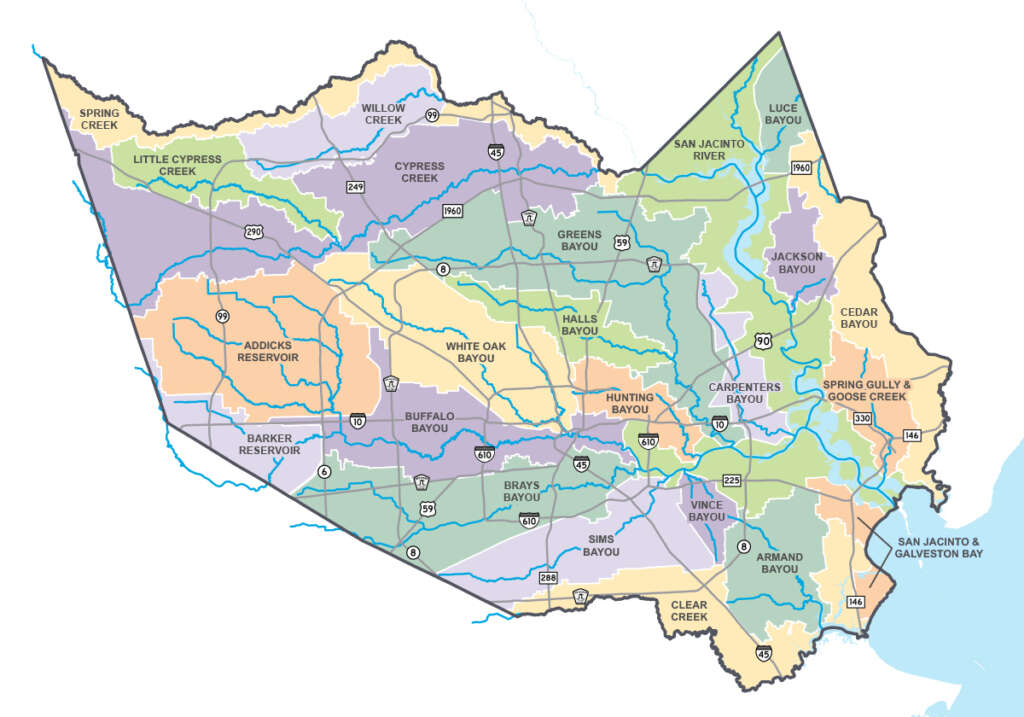
Across the watershed, the Harris County Flood Control District is carrying out that work at multiple locations in Harris County Precincts 1, 2 and 4, including a major sediment removal effort west of Highway 6, infrastructure and erosion repairs in the Greater East End, and channel repairs near Riverside Terrace and Hermann Park.
Together, the projects show how maintenance connects communities across precinct boundaries and why coordination among the Flood Control District, Harris County Precincts, the City of Houston, and other local partners is a complex, but necessary, part of maintaining Harris County’s flood control infrastructure.
One Watershed, Many Communities
Water does not follow precinct boundaries.
In western Harris County, crews may be removing sediment that has accumulated along the bottom of a channel. Farther east, the priority may be repairing erosion or replacing infrastructure that carries stormwater into the bayou. In another location, aging concrete lining may need to be replaced so a channel can continue functioning as intended.
The Flood Control District evaluates those needs throughout the drainage network and carries out maintenance projects where work is needed.
That ongoing effort is especially visible right now across Brays Bayou.
Nearly 1,000 Truckloads of Sediment Removed in Precinct 4
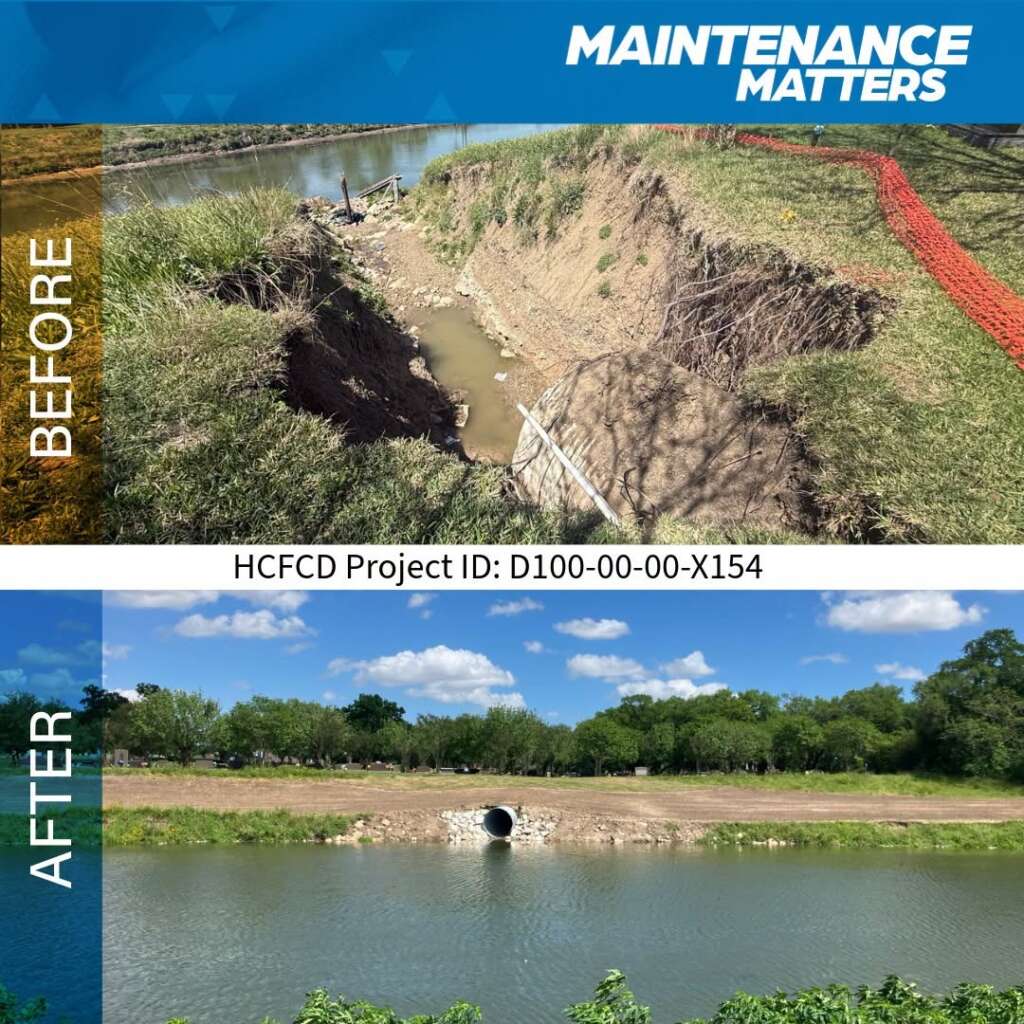
(Project ID D132-00-00-X015)
One of the largest recent maintenance efforts is taking place along the upper reaches of Brays Bayou west of Highway 6 near Westpark in Harris County Precinct 4.
Crews removed approximately 9,500 cubic yards of accumulated sediment from 1.5 miles of upper Brays Bayou. That’s nearly 1,000 truckloads of material!
Sediment naturally accumulates in drainage channels over time as stormwater carries soil and other material downstream. When enough material builds up, it can take up space within the channel that would otherwise be available to carry stormwater.
Removing the buildup helps maintain the channel’s intended conveyance, or stormwater flow.
City and County Infrastructure Come Together in the Greater East End
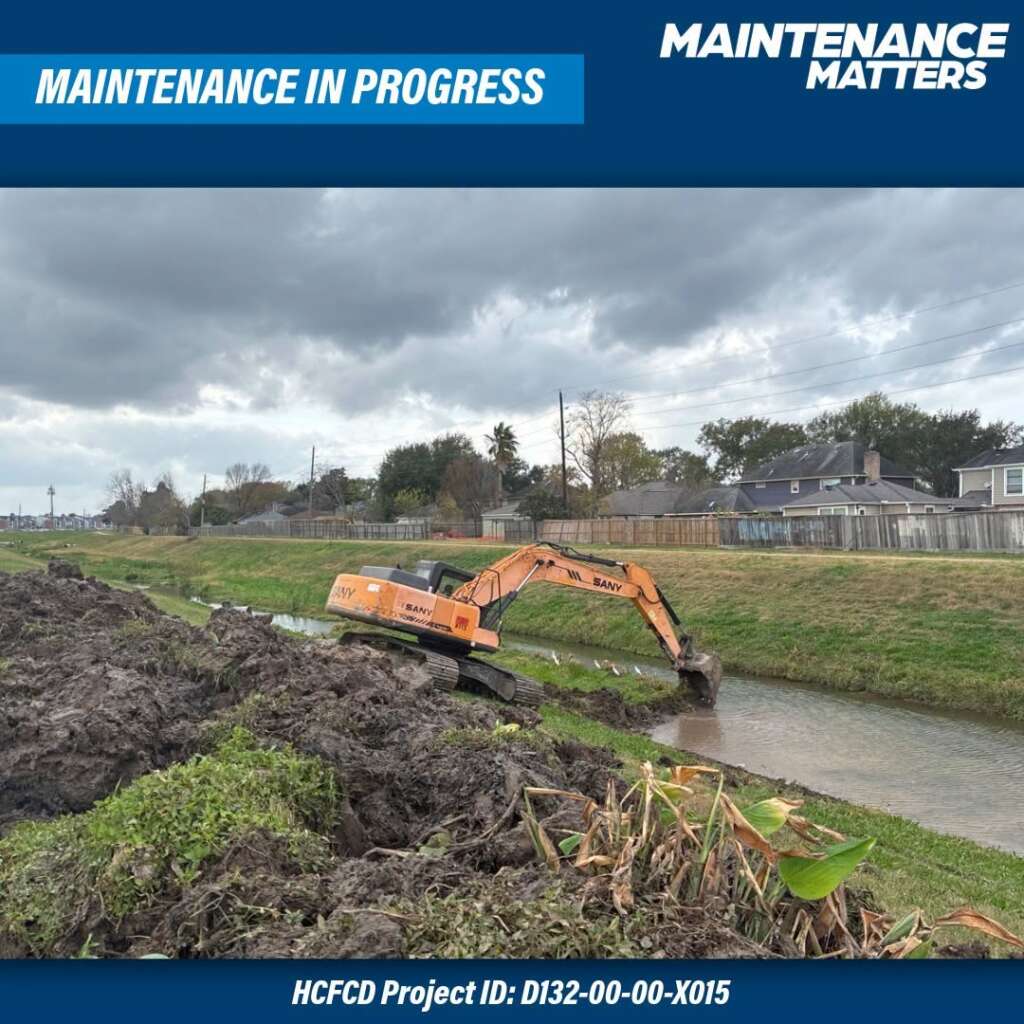
(Project ID D100-00-00-X154)
Maintenance can also require coordination between different public agencies.
Near Forest Park Lawndale Cemetery in Harris County Precinct 2, the Flood Control District recently completed erosion repairs and replaced a 90-inch outfall pipe.
The work was completed in partnership with the City of Houston.
Outfall pipes are important connection points between local drainage systems and larger waterways. Because these systems often intersect, coordination between agencies can be essential. The City of Houston and the Flood Control District each maintain infrastructure within their respective jurisdictions and right-of-way, working together when responsibilities overlap.
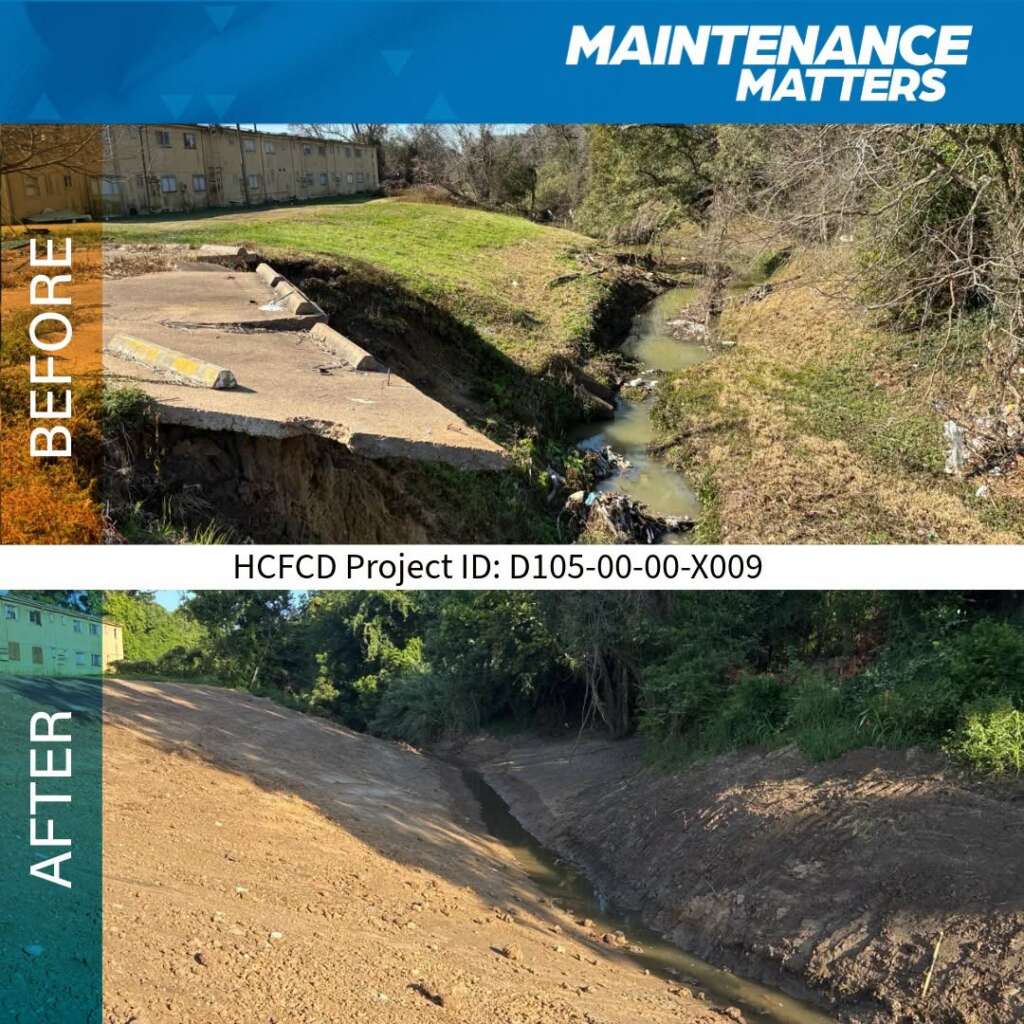
Addressing Erosion Near Griggs Road
(Project ID D105-00-00-X009)
Flood Control District crews completed erosion repairs along a Brays Bayou tributary near the Royal Palms Apartments off Griggs Road in Harris County Precinct 1.
The work reinforced portions of the channel affected by erosion so the tributary can continue functioning as intended.
Erosion is a normal process, particularly along waterways that repeatedly carry stormwater. Over time, however, erosion can change channel slopes, expose infrastructure, or contribute to slope failures that require repair.
Maintenance crews inspect and address these locations to minimize future erosion and preserve channel conditions.
More Channel Repairs Near Riverside Terrace and Hermann Park
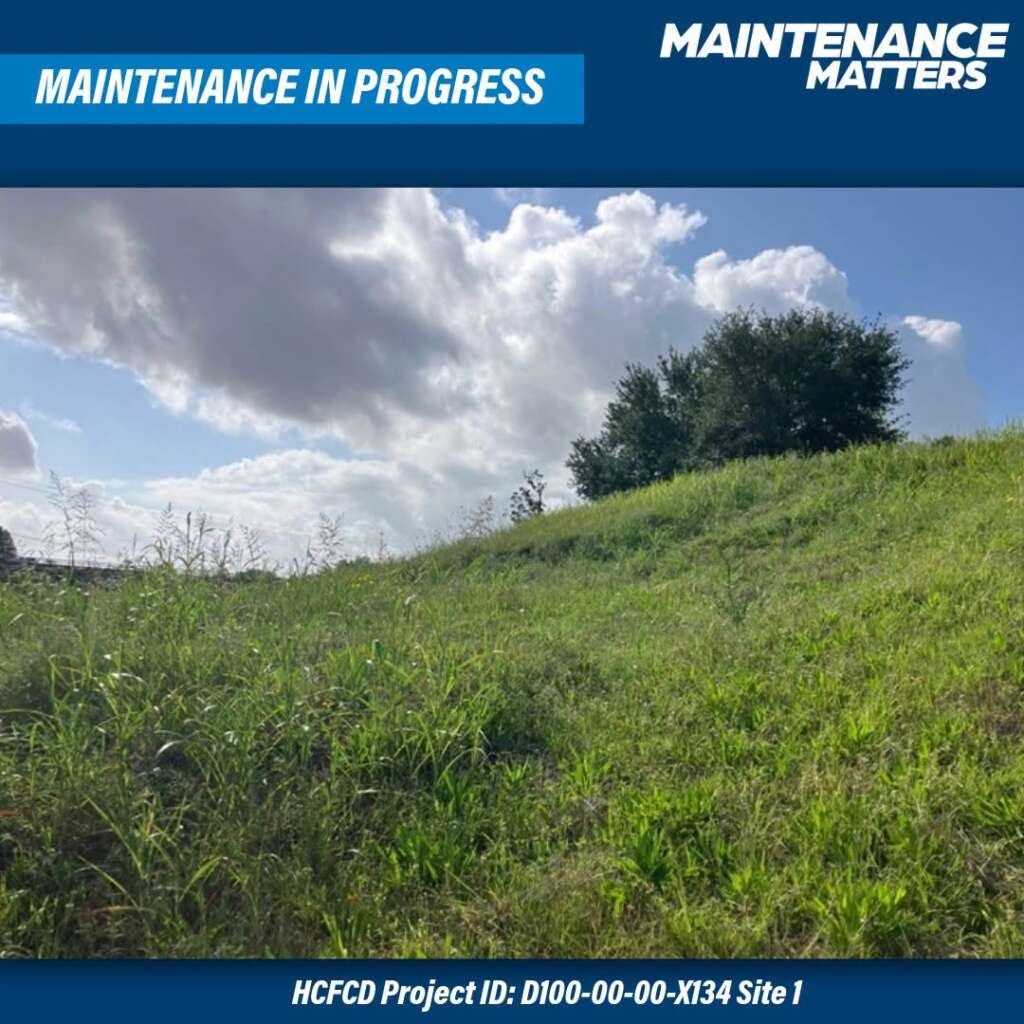
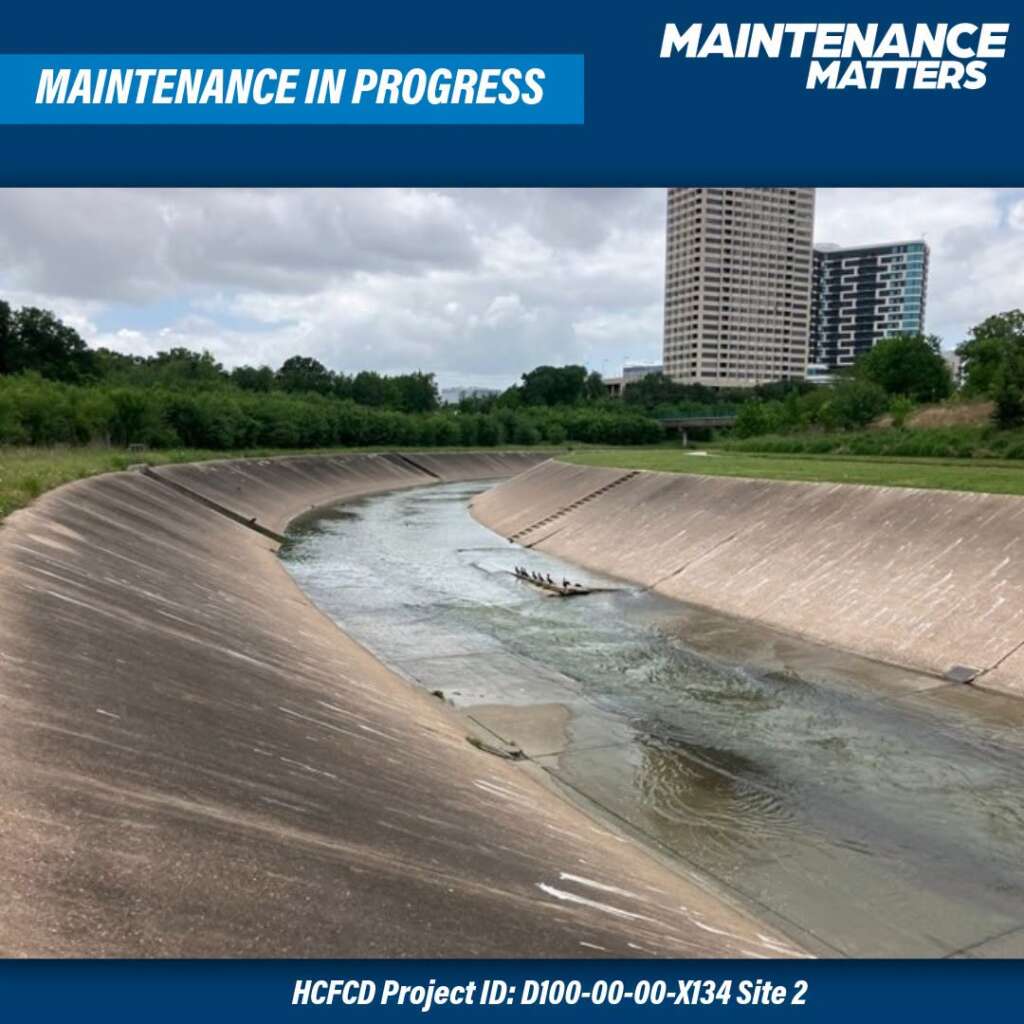
(Project ID D100-00-00-X134)
Additional work is moving forward along the Brays Bayou system near Riverside Terrace and Hermann Park, also in Harris County Precinct 1.
Earthen channel repairs are underway north of Leopold Drive. South of MacGregor Way at Almeda Road, the project also includes replacement of a concrete-lined section of channel, with that work expected to begin in the third quarter of 2026.
Why Partnerships and Precinct Coordination Matter
Across Harris County, flood control infrastructure works as a connected system that often crosses precinct, municipal, and agency boundaries. That makes coordination an important part of both major projects and maintenance work.
That coordination is also one reason projects can take time to move from planning to completion. In addition to working across jurisdictions, projects may involve engineering and design, right-of-way needs, utility conflicts, environmental reviews, permitting, funding, procurement, and construction scheduling.
Each step helps ensure work can be completed safely, responsibly, and in a way that supports the larger drainage system. While individual projects address specific local needs, together they help preserve and strengthen flood control infrastructure for communities across Harris County.
New flood risk reduction projects often receive the most attention, but existing infrastructure cannot simply be built and left alone.
The Brays Bayou projects are part of a broader effort that includes debris and sediment removal, slope failure repairs, channel rehabilitation, erosion repairs and other work throughout the county’s drainage network.
The individual projects may look different, but the goal is the same: preserve and strengthen the flood control infrastructure Harris County communities depend on.
Residents can stay informed about Flood Control District work occurring in their watershed and follow local precinct communications for information about projects that may affect nearby communities.
Want to learn more about Brays Bayou? Explore our two-part series for a closer look at the watershed, its history and the communities it serves.
To learn more about the Harris County Flood Control District’s maintenance programs and ongoing work across the county, visit hcfcd.org/Maintenance.