
Share This Article
Did you know? A healthy natural flood control channel isn’t supposed to be bare!
Trees and plants do more than make our natural channels look green. Leaving the right vegetation in place — and encouraging more to grow — helps reduce erosion, stabilize channel banks, support stormwater flow, and enhance the health of our natural resources.
The areas along these channels where land and water meet are known as riparian corridors. Often full of trees and native plants, these areas are vital for filtering runoff, supporting wildlife, stabilizing streambanks, and cooling the surrounding landscape.
Through its Riparian Management Program, the Harris County Flood Control District takes a selective approach to clearing vegetation rather than clearing everything.
Crews carefully remove invasive vegetation, hazardous trees, and blockages while preserving native plants that allow these natural systems to thrive.
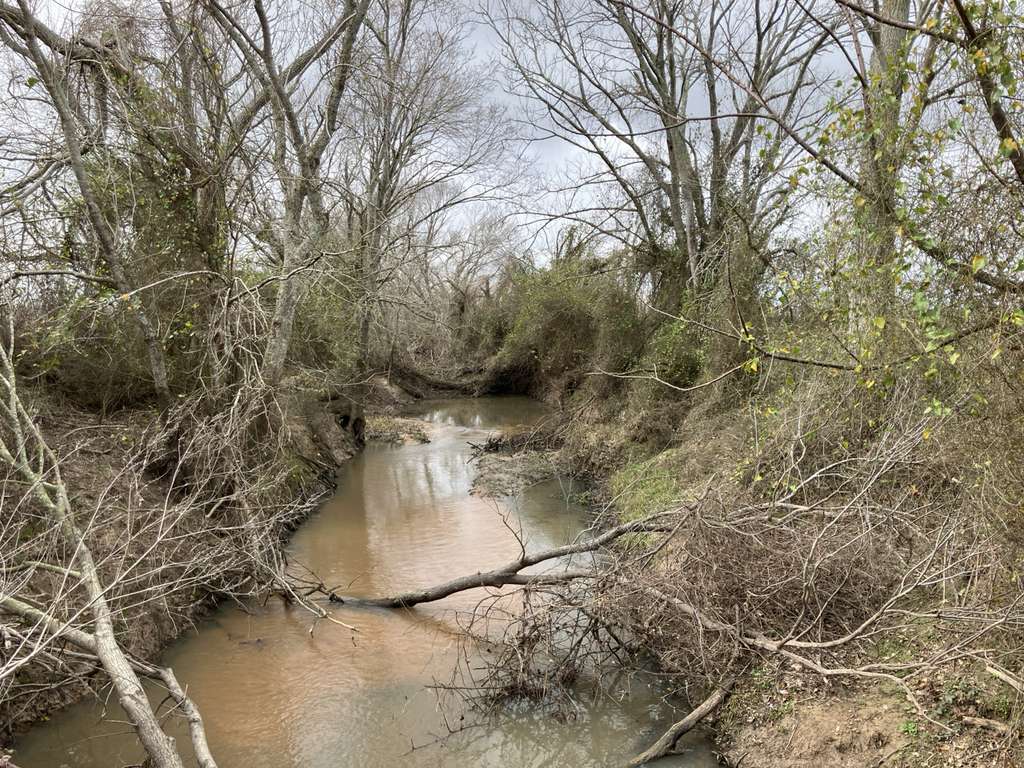

Riparian management also includes planting native seedlings to strengthen channel banks and encourage natural regrowth. In some areas, crews plant as many as 8,000 native seedlings per acre to help restore the forested canopy over time.
This seasonal maintenance work takes place on a rotating schedule across Harris County each year.
To protect nesting migratory birds, the Flood Control District limits this work to Sept. 16 through March 14. A qualified biologist also conducts a nest survey before any work begins, regardless of the time of year.
Thanks to increased investment in maintenance to preserve and strengthen existing flood control infrastructure, the Flood Control District can now return to these natural corridors more frequently.
Crews now revisit these areas every three to five years, instead of every five to 10 years.
This forward-looking, nature-based approach helps channels function as designed while protecting the ecosystems that support their long-term health.